Display your blog post individually in full grid view on a light background
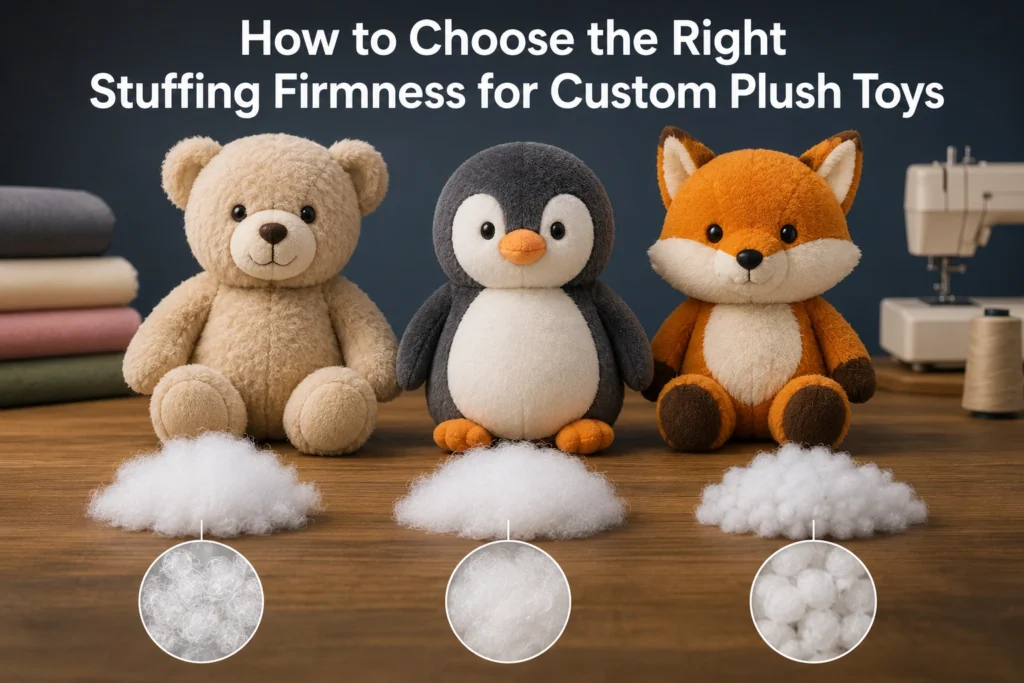
Most wholesale buyers specify a plush toy’s fabric, color, and size in detail, then leave the stuffing to “whatever the factory normally uses.” That gap is where a surprising number of quality complaints originate. Plush toy stuffing is not a single, uniform material — it is a variable that a…
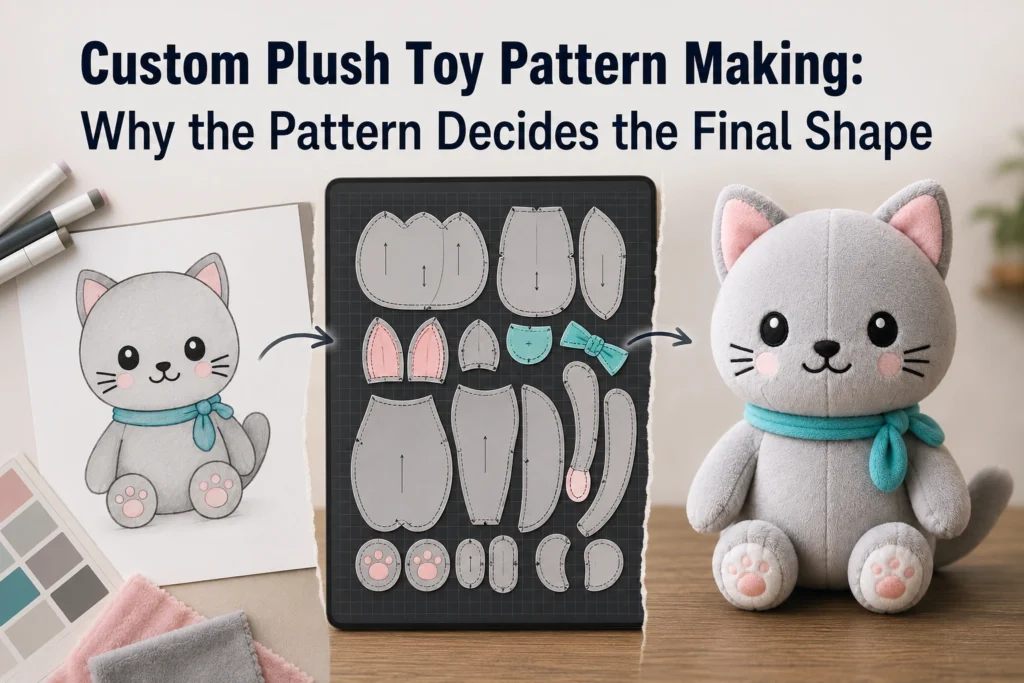
Most wholesale buyers approach a new plush toy program the same way: they finalize the character artwork, send it to a factory, and expect the sample to look exactly like the reference file. When the first sample arrives with a shorter snout, a flatter head, or ears that sit at…
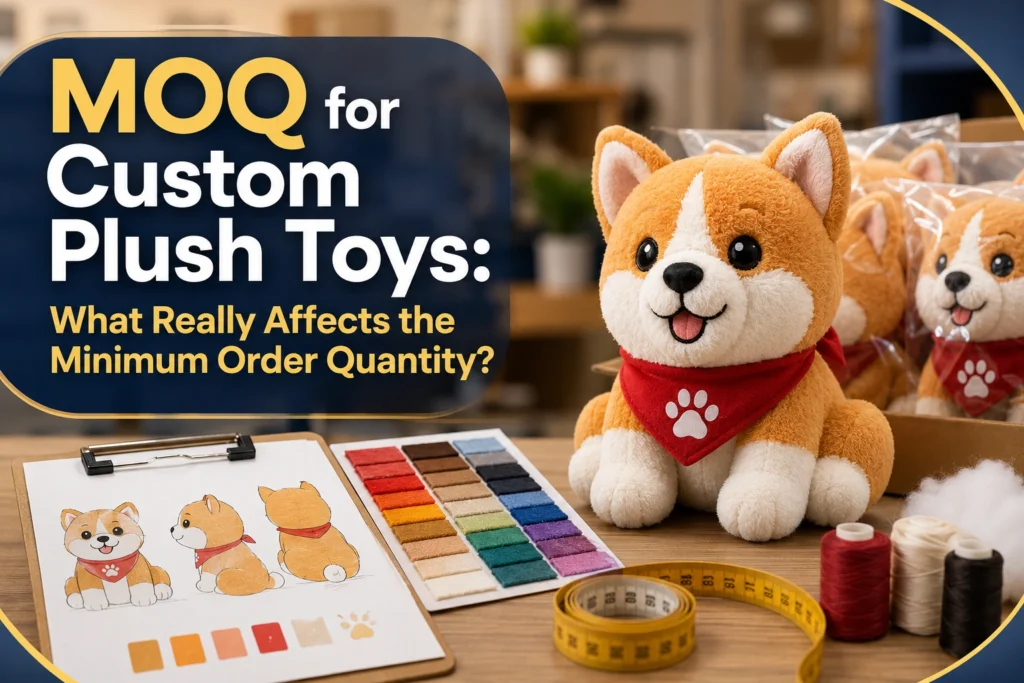
If you’ve requested quotes from three plush toy factories and received three different minimum order quantities for what looks like the same product, you’re not imagining things. Custom plush MOQ isn’t a fixed number a factory pulls from a price list — it’s the output of a production formula built…
Every B2B buyer sourcing custom plush eventually asks the same question: how do we bring the custom plush toy cost down without the product looking like it was made down to a price? It’s a fair concern. Plush is a tactile, brand-facing product — customers judge it by hand-feel, stitch…
A buyer can approve a great character design, a strong color palette, and a solid concept sketch — and still receive a bulk shipment that looks cheap on arrival. This is one of the most common frustrations in soft toy sourcing: the artwork was right, but the finished product doesn’t…
Fabric is the single decision that determines whether a custom plush toy looks premium on a retail shelf or feels cheap the moment a buyer’s customer picks it up. Two toys can share the same pattern, the same stuffing density, and the same trim, yet feel completely different in the…
If you have ever approved a plush toy sample and then opened a bulk shipment container to find the wrong shade of fur fabric, a softer stuffing feel, or looser stitching on the seams, you already know the core risk of plush toy bulk production: a great sample does not…
When B2B buyers search for plush toy embroidery, they are rarely looking for a decorative add-on. They are trying to solve a specific production risk: making sure a branded mascot, character, or promotional plush actually looks like the artwork their marketing team approved. Embroidery is the detail most likely to…
Every bulk plush order starts with one small object that carries a lot of risk: the prototype. Before a factory cuts fabric for 5,000 or 50,000 units, the buyer is expected to sign off on a single sample and trust that it represents what will come off the production line…
Turn 2D artwork into 3D plush toy without losing the details that make your character unique. Every plush order starts with the same quiet worry on the buyer’s side: “If I send my mascot artwork to a factory, will it actually come back looking like my character, or will it…
Buyers who submit flat 2D artwork for a new plush line are often caught off guard when the first physical sample arrives looking different from the design file — a rounder head, eyes set too far apart, a body that reads flatter or bulkier than the illustration, or embroidery sitting…
We will contact you within 24 hours